Easing the pain of Digital Transformation; 3 lessons from customers

Digital transformation can be the key for Inclusive Finance Providers to unlock growth and transform the customer experience. With the shift from traditional business models, Inclusive Finance Providers have access to new technologies, large volumes of data, and enhanced interconnectivity. But like any change, digital transformation comes with a myriad of challenges.
For microfinance institutions (MFIs), community development finance institutions (CDFIs) and social impact investors, new technologies help improve efficiency, reduce cost of operations, and deliver a better customer experience.
The challenges
Setting out on your digital transformation journey is a major undertaking. Many Inclusive Finance Providers have limited internal IT resources and have concerns about their capacity to adopt new technologies. Like many of our customers, you are probably asking yourself some hard questions about the challenges, such as:
- Do we have enough time to manage this alongside our day job?
- How do I get off my legacy system quickly?
- This is a really big change. How will our people cope?
- We really can’t afford to do all of this in one go – can we do it in stages?
- I really like some of the new things we could do but I am not sure we need them now – will I miss the boat if I don’t get them included now?
Change elicits fear and this is natural. But as a result, many Inclusive Finance Providers are at risk of missing out on opportunities presented by digital solutions.
Through our experience in implementing Singlify in with MFIs and CDFIs across Europe, we want to share three suggestions to consider as you start your digital transformation journey.
Lesson 1 – Start with the Minimum Viable Product (MVP)
MVP is part of the Agile approach used by many of the world’s leading technology companies. It is based on a belief that the best way to make a new product or new system successful is learning through experience of actually using it. It is hard for users to understand what really matters until they can see and use the new system, and so it is best to get to this point as quickly as possible, and then focus on learning and improving.
In the case of Singlify, we advise you to adopt the core features of the Singlify application and implement them in your day to day operations. We appreciate that Singlify has a whole range of features and third-party products, but you might not need all these at once. We have looked at our implementations so far, and many customers have chosen to wait until they have live experience of Singlify before going on to implement certain functionality, such as:
- customer portals
- full automation of payments
- e-signing of documents
- automated customer messaging
- stakeholder social impact reporting
- integrating other business support services such as mentoring and training.
The MVP approach has the added benefit of providing early time to value and shortening the overall timeframe to achieve return on investment (ROI). Whether you measure the benefits in reduced operational costs, or the ability to scale the business by acquiring more clients more quickly these goals can be achieved faster by achieving an early implementation of critical functionality. Which leads to the next recommendation:
Lesson 2 – Phase the Implementation
Singlify implementations can be broken down into three distinct functional blocks:
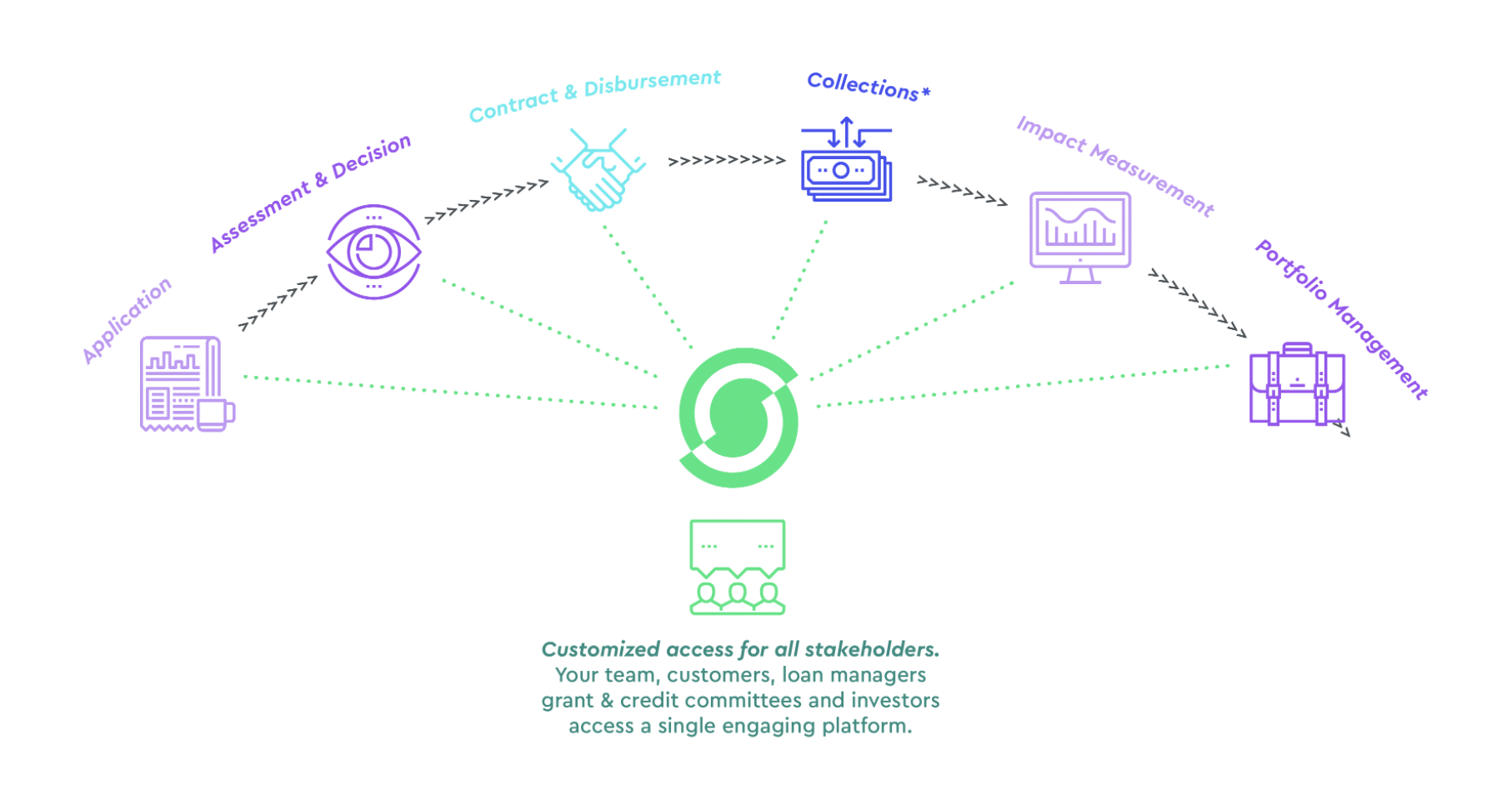
- Customer Relationship Management (CRM), covering the management of customer interactions
- Loan Origination, covering the process from loan application through underwriting to the release of funds
- Loan Management, covering loan scheduling, the collection of payments, issue of statements, loan rescheduling, loan accounting and recovery management.
These are the best basis for phasing the implementation. Inclusive Finance providers whose issues are around the time taken to process new applications might start with Loan Origination, while institutions whose issues are around the cost and inflexibility of their legacy loan management system might begin with loan servicing. The table below shows different examples of how our customers have used these blocks to make their implementation more manageable and to minimise the time to realise value from their Singlify investment.

Lesson 3 – Retain ownership
Digital transformation can be difficult and so it is tempting to hope that someone else can make it happen for you. It can also be tempting for us, as system provider, to take on this role, but our experience is that this never works well. Our lessons are that our most successful customers:
- had a senior sponsor for the project
- set up a steering committee to make the key decisions about scope, budget and timetable
- appointed a single person to lead and manage the project who could work closely with us
- understood what their organisation needed to do at each stage
- worked at a pace they could sustain and slowed down if necessary.
Looking to get started?
Like with all new technologies, adopting an end-to-end loan management system might seem like a gargantuan task. Having supported many organisations in their digital transformation, our team at Singlify have learnt many lessons about what works and what doesn’t work.
We’ve found that for most customers our Delta program is the place to start. It is a low risk, time limited programme specifically tailored at inclusive finance providers who want to understand what a digital transformation programme would look like for them. The programme demands a finite amount of time and gives clear guidance about what needs to happen next and whether the time is right for you.
If you are considering digital transformation but need some help in understanding what is involved and what the benefits could be then now may just be the right time for us to talk.